Unreconciled: Evolving with Feedback
How books work...

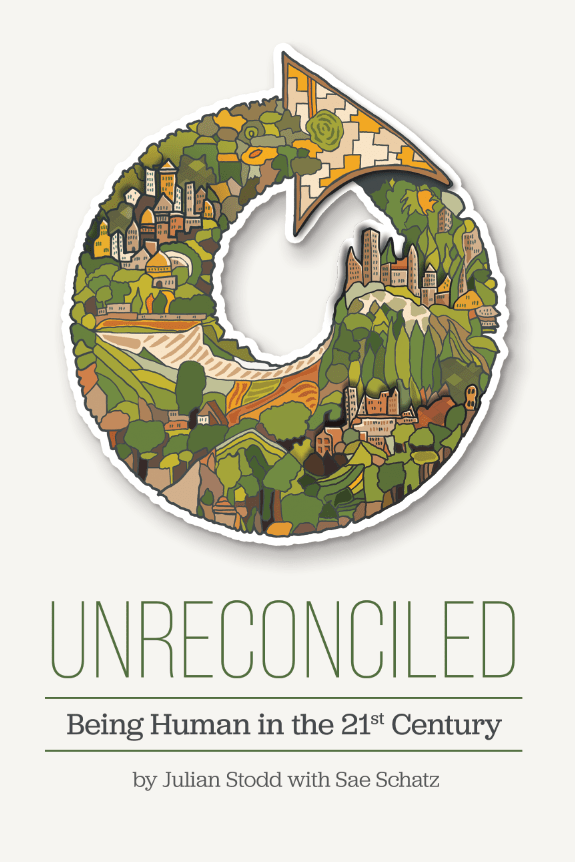
We’ve had feedback from what may be our final round of beta readers for the new book, ‘Unreconciled: being human in the 21st Century’. It’s been a really helpful mixture of things, from direct suggestions, through reflective comments, and just people adding their own narrative upon, and around, what we have written.
Part of this process is deciding what to change, and part of it is deciding what to keep exactly the same. Typos (of which there are mercifully few) are clearly rectified. Other questions, around structure, signposting, and message, sometimes require discussion, further research, or just a gut judgement. But in doing this, we try to hold each other account to whether we are making a sensible call, or just being lazy.
Typically I’m guided in this by understanding what a book stands for, and the importance of the act of termination in the creative process. Or to put it another way – the act of ‘stopping’ is not simply a deadline, but rather a deliberate choice.
I’m clear that – for me at lest – the act of publishing is the point at which a book shifts from being ‘what I think’ to ‘what I used to think’. There’s no harm in this: the half life of the text is not fixed, but contextual. This has been particularly apparent to me with the Socially Dynamic Organisation book, which is now almost six years old, and yet has gone from being right at the heart of my thinking, to being peripheral, but now racing back to the centre. It has a new narrative, and probably requires an update. So books do not die, but neither do they always tell a current story.
There are times in the writing process over the last couple of months where I can sense that we are on the edge of opening up new space, rather than truly polishing what we already have. The decision is always hard, but the risk is very real. What started as a ten thousand word essay is now more than thirty thousand words, and it does not need to be any longer!
The real surprise for me – and something that has emerged purely from the collaboration with Sae, and the chances to share this new work in so many spaces – is how clearly this new work aligns to Engines of Engagement. So much so that I will explicitly address this in the launch campaign. And I think that some of our conversations now are really steering towards where we go next.
In this sense, the books follow one trajectory, and we follow another, but not parallel. We weave around each other. Sometimes a book tells a clearer story than I do, and at others my narrative is clearer, or more interconnectivle, than the words I wrote some time ago.